
In short
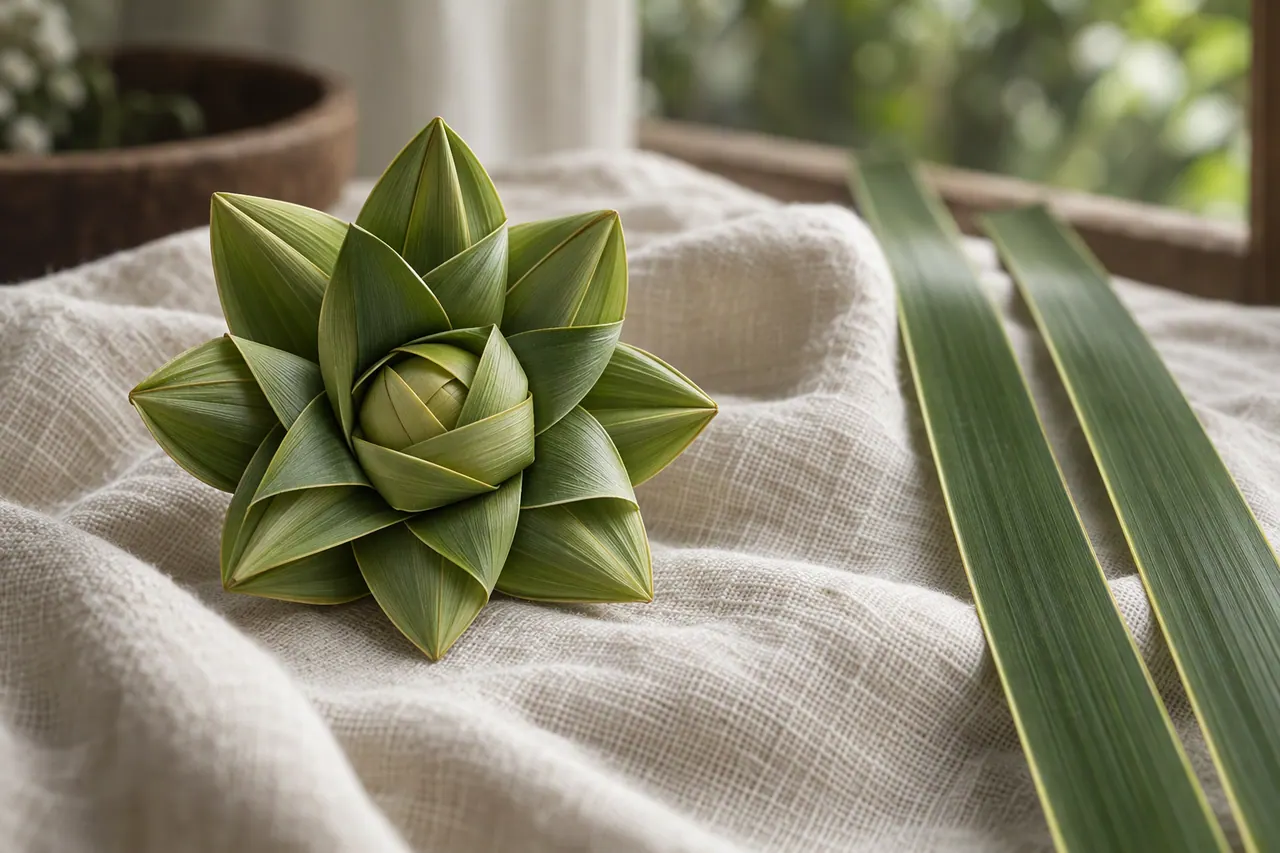
A coconut leaf flower is built from one strip folded into repeated loops. Ten minutes, a single leaflet, and a finished bloom for tables and gifts.
A coconut leaf flower looks far more complicated than it is. It is built from a single strip folded into a repeated loop, and the whole thing comes together in about ten minutes once you have the rhythm.
I fold these by the dozen for table settings and gift toppers, because they cost nothing but a leaf and they hold their shape for weeks without a drop of water.
The whole flower depends on tension. Each loop has to be pulled snug before the next one is folded, otherwise the petals drift apart and the bloom looks loose and tired. Coconut leaf is ideal for this because it has a natural spring; it grips itself as it dries and the finished flower actually tightens rather than falling apart. That is why a ten-minute fold can last a month on a table.
What You'll Need
- 1 coconut leaflet, about 40 cm long
- Sharp scissors
- A damp cloth
- A hard flat surface to work on
Preparing the leaflet
Choose a leaflet that is wide but still flexible, around 3 cm across at its widest point. Run your thumbnail down the spine to flatten it, then fold the leaflet in half lengthways so the glossy side faces out. A quick wipe with a damp cloth keeps it pliable while you work, and it matters more than you would expect: a dry leaflet cracks at every twist, while a damp one bends without complaint.
Folding the flower
-
1
Fold the first loop
Hold the leaflet about 10 cm from one end and fold a loop over your thumb, leaving a short tail hanging down.
-
2
Twist to lock
Twist the tail once around the loop to lock it, then fold the next loop right beside the first. Keep each loop roughly 3 cm across.
-
3
Build five petals
Repeat the twist-and-fold four more times so you have five loops arranged in a rough circle. Pull each one snug before starting the next.
-
4
Close the centre
Thread the remaining tail through the middle of the flower and pull gently until the petals gather into a tight rosette.
-
5
Even out the petals
Nudge each loop until the five sit at even angles, then pinch the centre firmly to set them in place.
-
6
Trim and settle
Cut the tail close to the centre and press the flower flat under a book for ten minutes so it holds its shape.
Making the petals even
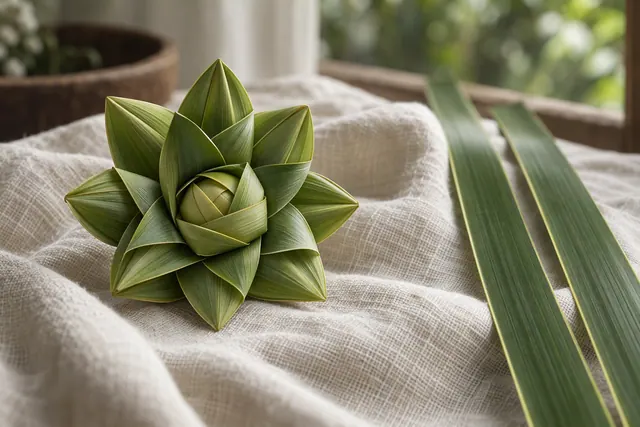
The first flower usually looks uneven, and that is completely normal. The loops want to sit at slightly different angles at first, so once the petals are gathered, nudge each one until they are evenly spaced. A flower with five even petals reads far better than one with six uneven ones, so do not rush ahead to add more loops before the ones you have are tidy. If a petal springs open, unwind back to the previous twist and refold that single loop.
Using your flowers
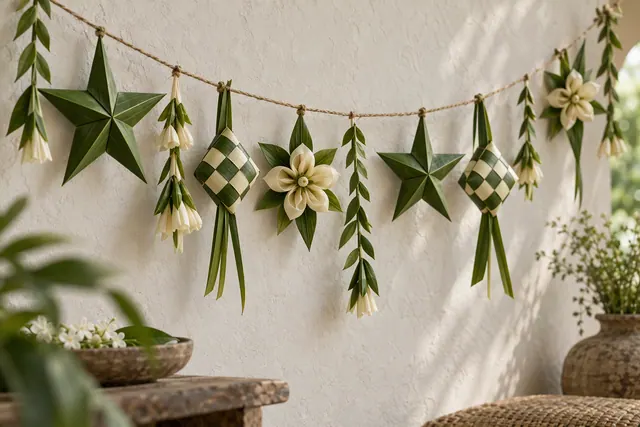
- Table settings - rest one on each folded napkin for a natural place setting.
- Gift toppers - thread two onto the ribbon of a wrapped present.
- Garlands - join twenty flowers with fine twine for a doorway garland.
- Hair clips - glue a small flower to a plain clip and let it dry overnight.
Tips for tidy flowers
- Pull every loop tight before folding the next; loose loops never recover.
- Fold on a hard surface, not on fabric, so the leaf does not sink as you twist.
- If a loop slips open, unwind to the previous twist and start that petal again.
- Leaves that are too dry crack at the twists, so keep a damp cloth to hand.
A flower folded from a fresh leaf tightens as it dries and will hold its shape for about a month indoors.
Short on time?
We sell finished coconut leaf flowers in sets of six for tables and gifts.