
In short
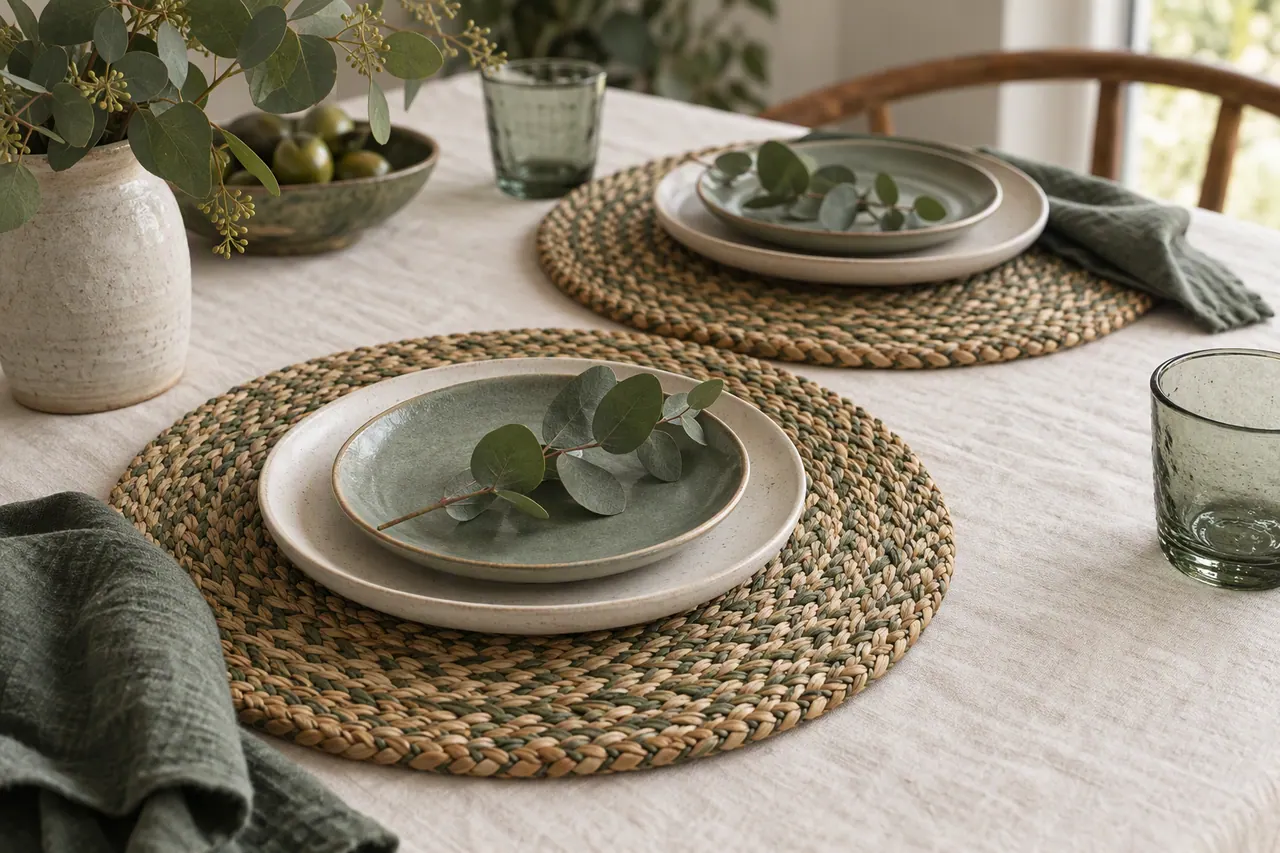
A set of four natural palm leaf placemats, 35 cm by 25 cm, woven flat and pressed crisp. A calm weekend project that upgrades every meal you eat.
Placemats are the project that turns a plain table into somewhere you want to sit. They are also forgiving: flat, rectangular, no corners to turn and no rim to fold.
A set of four, each 35 cm by 25 cm, takes about three hours in total. Weave them in one sitting and press the whole stack flat overnight.
The reason homemade placemats beat bought ones is that they match the table rather than fighting it. Natural leaf sits quietly under any plate, where a printed mat tends to compete. The one thing that matters is flatness. A placemat that curls at the edge is a nuisance every single meal, so the pressing stage is not optional. Weave all four, stack them, and leave them under weight for a full day. The other quiet advantage is that you can size them to your table, which is something no shop will ever do for you. Weave them all in one afternoon if you can, because stopping halfway and coming back the next day is how a set ends up with mismatched colour.
What You'll Need (for four mats)
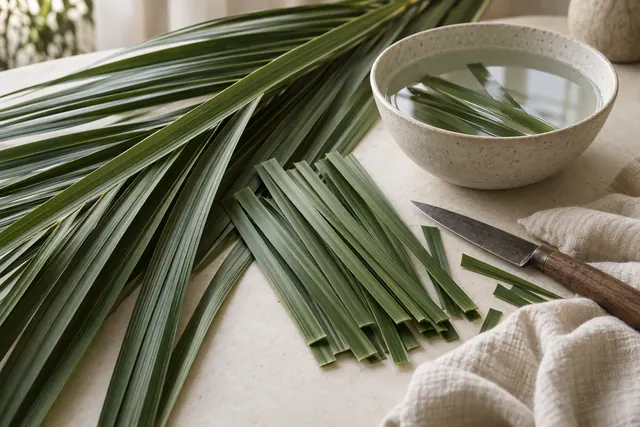
- 32 palm leaf strips, 2 cm wide and 45 cm long
- Sharp scissors and a ruler
- A spray bottle of water
- A clothes peg
- Two boards and a stack of books for pressing
Weaving the set
Step-by-step instructions
-
1
Cut everything first
Cut all 32 strips to the same width and length before you weave a single one. Matching strips are the only way four placemats end up looking like a set.
-
2
Lay eight uprights
For each mat, lay eight strips vertically, 2 cm apart, and peg the top. That gives a woven width of about 35 cm once the crossing strips are in.
-
3
Weave the rows
Weave eight horizontal strips across, alternating the over-under pattern each row. Pack each row up snug and keep the ends square by lining them up with a ruler.
-
4
Tuck the edges
Fold every loose end back over the outer row and tuck it under, so the finished edge is a neat doubled line. Trim to 5 mm past the fold.
-
5
Press flat
Stack all four mats between two boards, weight them with books and leave them for a full day. This is what keeps them lying flat on the table for years.
- Weave all four mats before pressing, so they dry at the same rate and match.
- Keep the weave snug, not tight. A tight mat cups upward at the corners.
- Line up the outer edge of every mat with a ruler as you go.
- Leave a 2 cm border on a large table, or butt them edge to edge on a small one.
- Store them flat, never rolled, or the curl comes back.
Natural leaf mats need a little care to stay nice. Wipe up spills straight away, because a ring of red wine left for an hour will mark the leaf permanently. Once a month, wipe them with a cloth barely dampened with water and a drop of mild soap, then dry them flat. Do not stack them wet and do not put them away damp, or the bottom mat will go mouldy while the top one stays fine. If you use them daily, expect the colour to settle into a warm amber over the first year, which is part of the charm rather than a fault. For extra protection, a light coat of beeswax on the top face every few months keeps spills sitting on the surface long enough to wipe away, and it deepens the colour as it builds. Avoid leaving a mat in direct sun as well, because the leaf fades unevenly and a sun-bleached mat never comes back.
Sizing for your table
Measure your table before you cut anything. A rectangular mat 35 cm by 25 cm suits most dining settings, leaving room for a plate, a glass and a little cutlery. On a small table, 30 cm by 22 cm keeps the mats from crowding the centre. On a long table, consider one woven runner instead of four mats: a panel 35 cm wide and 150 cm long, woven the same way, reads as a single calm line down the middle. Whichever you choose, leave a 2 cm border of bare wood at the table edge, because mats that overhang look as though they are about to slide off. Weave a test mat first if you are unsure, lay it on the table with your everyday plates, and adjust the size before you commit to a whole set. It takes twenty minutes and it saves you from making four mats that are the wrong size for the plates you actually own. A mat that is 2 cm too small is a daily irritation; one that is 2 cm too large looks generous and calm. When in doubt, go larger.
Helpful Tips
- Weave all four from the same frond so the colour is identical. Two fronds cut days apart will never quite match.
- If a mat curls after pressing, mist it and press it again for a day. It will settle.
- A light coat of beeswax on the top surface makes the leaf far more resistant to spills.
- For a runner instead of mats, weave one long panel 35 cm wide and as long as your table.
- Number the underside of each mat in pencil so you can rotate them and wear them evenly.
- Keep a spare mat aside for the day one gets a bad spill. Matching a replacement later is far harder than storing one now.
Set the table tonight.
Our placemat sets are pressed flat, waxed and ready to lay out the moment they arrive.