
In short
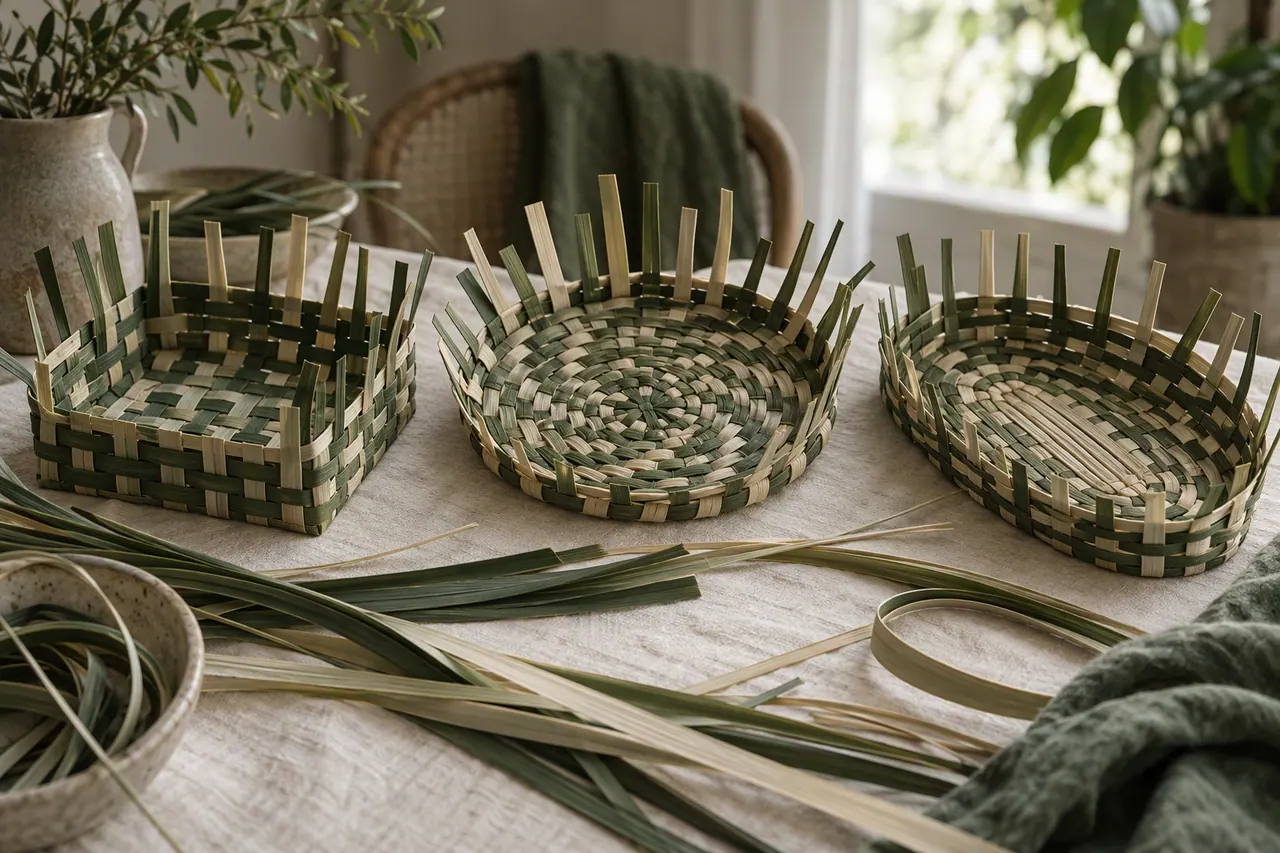
A reference guide to the three basket base shapes - square, round and oval - with the weave, strip count and time each one needs to get right.
Every basket you will ever weave starts with a base, and the shape of that base decides what the basket can become. Get it flat, even and the right size, and the walls almost build themselves.
This is a reference, not a single project. It compares the three base shapes I use most, tells you which one to choose, and explains how to rescue a base that has gone wrong.
Why the base decides everything
A base sets the footprint of the basket and the angle the walls rise at. A square base gives four clean corners and stands firmly on a table. A round base spreads weight evenly and suits bowls and planters. An oval base splits the difference and makes bread baskets and trays. Choosing the wrong one is the most common reason a basket looks clumsy, so it is worth a minute of thought before you cut a single strip.
| Base shape | Weave | Strips to start | Time | Best for |
|---|---|---|---|---|
| Square | Over-under cross | 12 (6 each way) | 40 min | Bags, boxes, storage baskets |
| Round | Paired radial | 16 (8 pairs) | 50 min | Bowls, planters, coasters |
| Oval | Square core, rounded ends | 16 (8 each way) | 55 min | Bread baskets, trays, cradles |
Square bases: start here
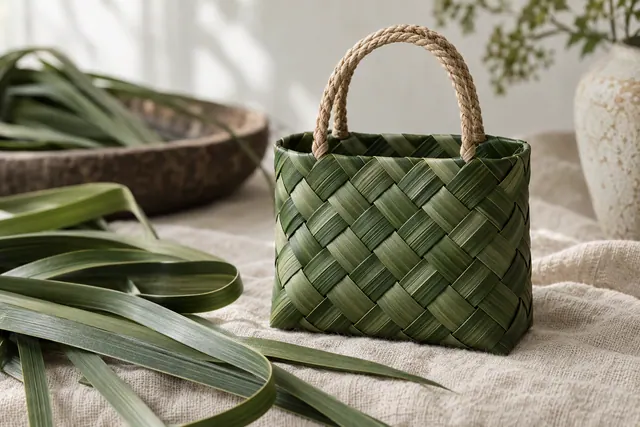
The square base is the one to learn first. It is a simple over-under weave, it is easy to keep flat, and the corners give you obvious reference points when you start the walls. Most beginners weave their first three or four baskets on a square base before moving on. Aim for a base about 12 cm across for a small basket and 18 cm for a large one.
- Lay six strips side by side, all the same width.
- Weave six more strips across them, one over and one under, alternating each row.
- Push every row snug so no gaps show between strips.
- Check the base is square by measuring both diagonals; they should match.
- Clip the base to the table edge before you begin the walls.
Round and oval bases
Round bases are woven from the centre outward in paired strips, with each pair split as it goes so the circle grows evenly. The risk is a base that domes upward like a saucer; this happens when the outer rows are pulled too tight, so ease off as you work outward. Oval bases start as a small square core, then you round off the two short ends by fanning the corner strips, which is fiddlier than it sounds and usually takes two or three attempts to look symmetrical.
- For round: cross four pairs in the centre, then weave each pair outward, splitting it to add new spokes.
- For round: keep adding spokes until the circle reaches your target diameter, easing tension as you go.
- For oval: weave a small square core of 6 by 4 strips.
- For oval: fan the corner strips of the two short sides to round them off.
- For oval: check both ends match by folding the base in half lengthways.
Common faults and how to fix them
| Fault | Cause | Fix |
|---|---|---|
| Base domes upward | Outer rows pulled too tight | Undo the outer rows and reweave with looser tension |
| Base will not lie flat | Uneven strip widths | Trim all strips to the same width before weaving |
| Base is not square | Rows pushed unevenly | Measure the diagonals and re-space the rows to match |
| Corners split | Dry leaf or over-tight corner tucks | Mist the leaf and fold corners on a slight curve |
| Base too small | Too few starting strips | Add a second set of strips rather than stretching the weave |
Getting any base right
- Cut every strip to the same width; uneven strips are the root of most flatness problems.
- Weave the first three rows, then check flatness on the table before going further.
- Clip the base down while you start the walls so it cannot lift.
- Measure the diagonals on square bases; matching diagonals means a true square.
Ready to build the walls?
Our beginner basket kit includes prepared strips and the base pattern for all three shapes.