
In short
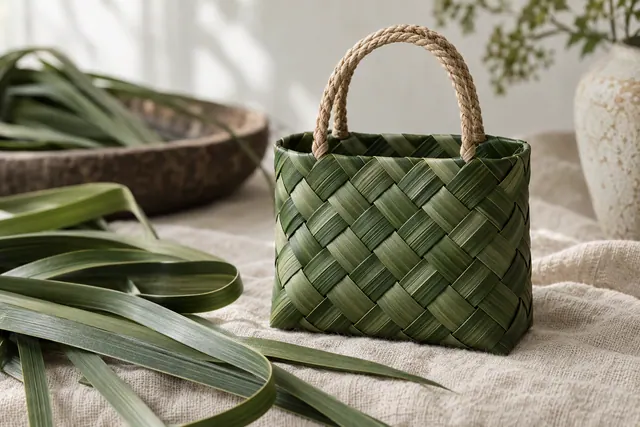
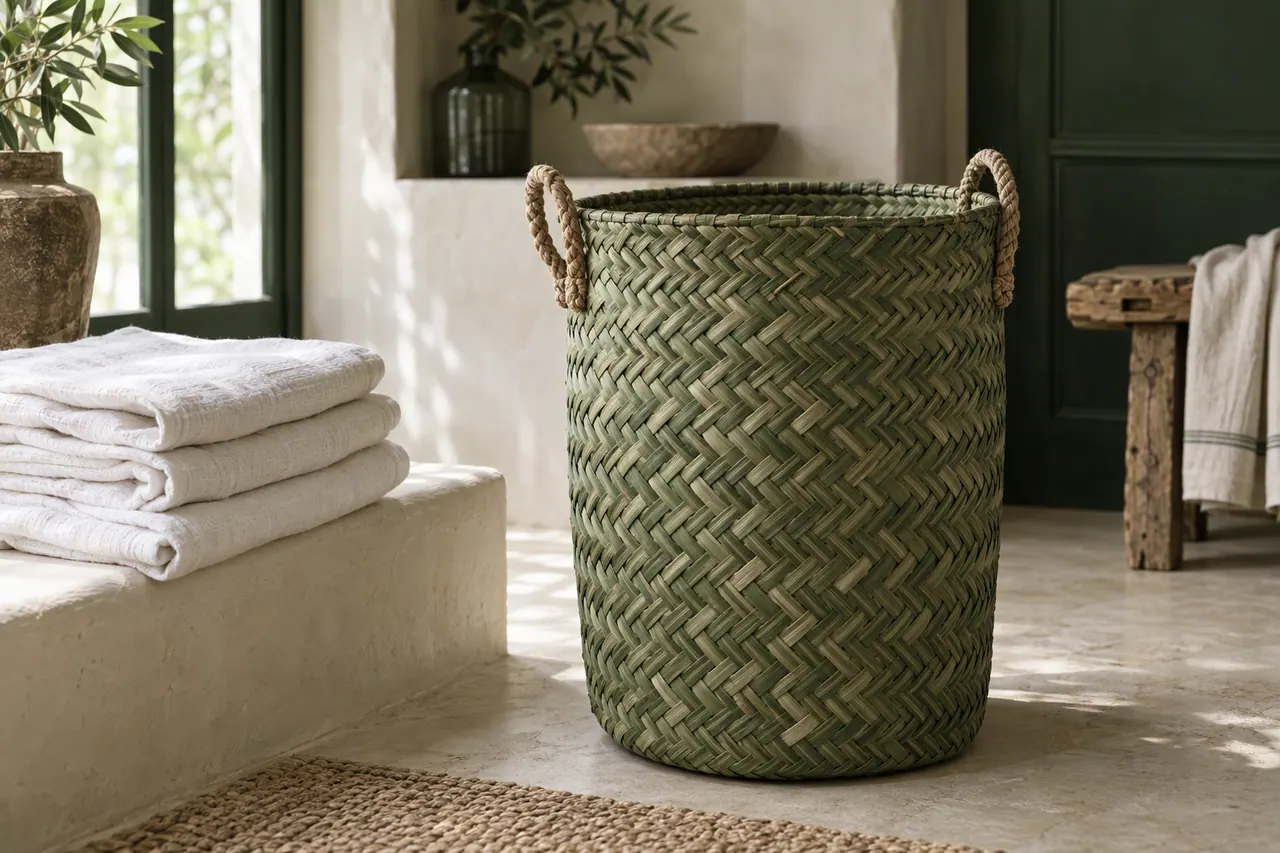
A big round laundry basket, 45 cm across and 40 cm tall, sturdy enough to carry a full load. Built from palm, banana leaf and a little rope.
This is the biggest basket most people will ever weave, and it is a proper commitment: about seven hours of work across a few evenings. It is 45 cm across and 40 cm tall, which holds a full machine load with room to spare.
The payoff is a laundry basket that lasts for years and looks far better than plastic. It is also the project that teaches tension control, because every wobble shows across forty centimetres of wall.
The trick with a basket this size is to build it in stages and let it rest. Weave the base one evening, the lower wall the next, and the rim and handles on the third. Leaf that is worked for hours at a stretch dries unevenly, and on a basket this big an uneven drying line is very visible. Resting also lets you check the shape while it is still soft enough to correct. A laundry basket is the one project where patience genuinely shows in the finished piece.
Materials for a 45 cm Basket
What You Will Need
- 60 to 70 palm leaf strips, 2 cm wide and 90 cm long
- 20 banana leaf strips, 2 cm wide, for the strongest rows
- 2 m of 8 mm jute rope for the handles
- Sharp scissors
- A large bowl of water and a cloth
- A round former, such as a 45 cm drum or a firm cushion, to keep the shape
- A dozen pegs or clips
Do not be tempted to use soft, young leaves for a basket this size. They feel lovely to weave but they stretch under load, and a laundry basket that sags at the base is useless. Choose mature palm leaves with a firm spine, and keep the banana leaf for the rows that carry the most weight. If you can only get young leaves, weave more rows of them and expect to replace the basket sooner. Buy more strips than you need; running short two rows from the top is a genuinely miserable feeling.
Weaving the Basket
Step-by-Step Instructions
-
1
Weave the base
Weave a round base to 45 cm across, using banana leaf for every second row because it takes more load. Keep the base flat and press it under a board each evening so it cannot cup.
-
2
Turn and lock
Fold the uprights up and weave two locking rows tightly, then slip the former inside to hold the circle while you work. Do not skip the former; the wall will bow without it.
-
3
Weave the lower wall
Weave straight walls to 20 cm of height, checking the diameter against the former every few rows. Banana leaf goes in every third row for strength.
-
4
Rest overnight
Leave the basket on the former overnight so the lower half dries straight before you continue. This single rest prevents most of the sagging that ruins big baskets.
-
5
Weave the upper wall
Continue to 40 cm total height, easing tension as the basket gets taller so the top does not pinch inwards. Check the circle against the former as you go.
-
6
Finish the rim
Fold the last upright down over two rows and tuck each end deep into the wall. Add a second locking row for strength, as this rim will carry the whole load.
-
7
Add rope handles
Thread 1 m of rope through each side, wrap the rim where it joins, and knot inside. Test with a full load before trusting it with anything breakable.
Keeping It in Shape
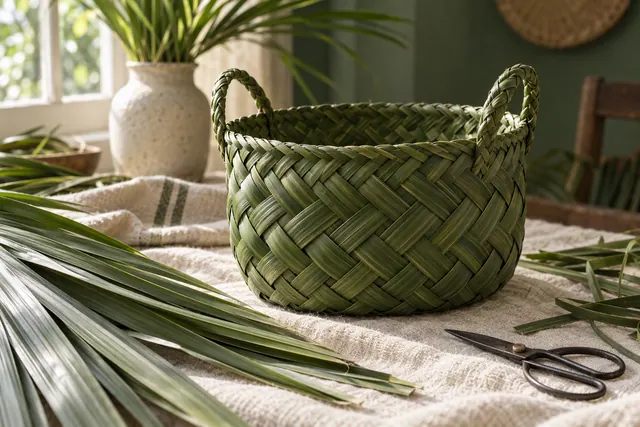
A large basket is at its most fragile in the first week. Keep it on the former for three full days after finishing, and do not fill it until the weave has cured for a week. After that it is remarkably tough, but it still dislikes being left damp. Line it with a cotton bag if you put clothes in it straight from the machine, and let the basket air for a few hours afterwards.
Handles and Everyday Use
The rope handles are what make this basket practical, and they are worth doing properly. Wrap the rim where each handle meets it, as described in our handle guide, and test the basket with a full load before you trust it. In daily use, keep the basket off damp floors and away from radiators, both of which dry and crack the fibre. Empty it and let it air once a week, and it will hold its shape for years rather than months.
Never put a wet load into a freshly woven basket. Damp leaf is soft, and the weight of wet laundry will stretch the base out of shape within minutes. Let the basket cure for a full week before it meets its first wash.
Helpful Tips
- Weave the base with the strongest leaves; it carries the whole load.
- Use banana leaf for every second or third row in the lower half, where stress is highest.
- Rest the basket on its former between sessions so it cannot sag.
- Give it a light rub with beeswax once fully dry to keep the fibre supple and to shrug off damp.
- Weave the rim with two locking rows; a single row will not take the weight of a full basket.
Short on time?
Our large laundry baskets are woven to this pattern and cured for a full week.