
In short
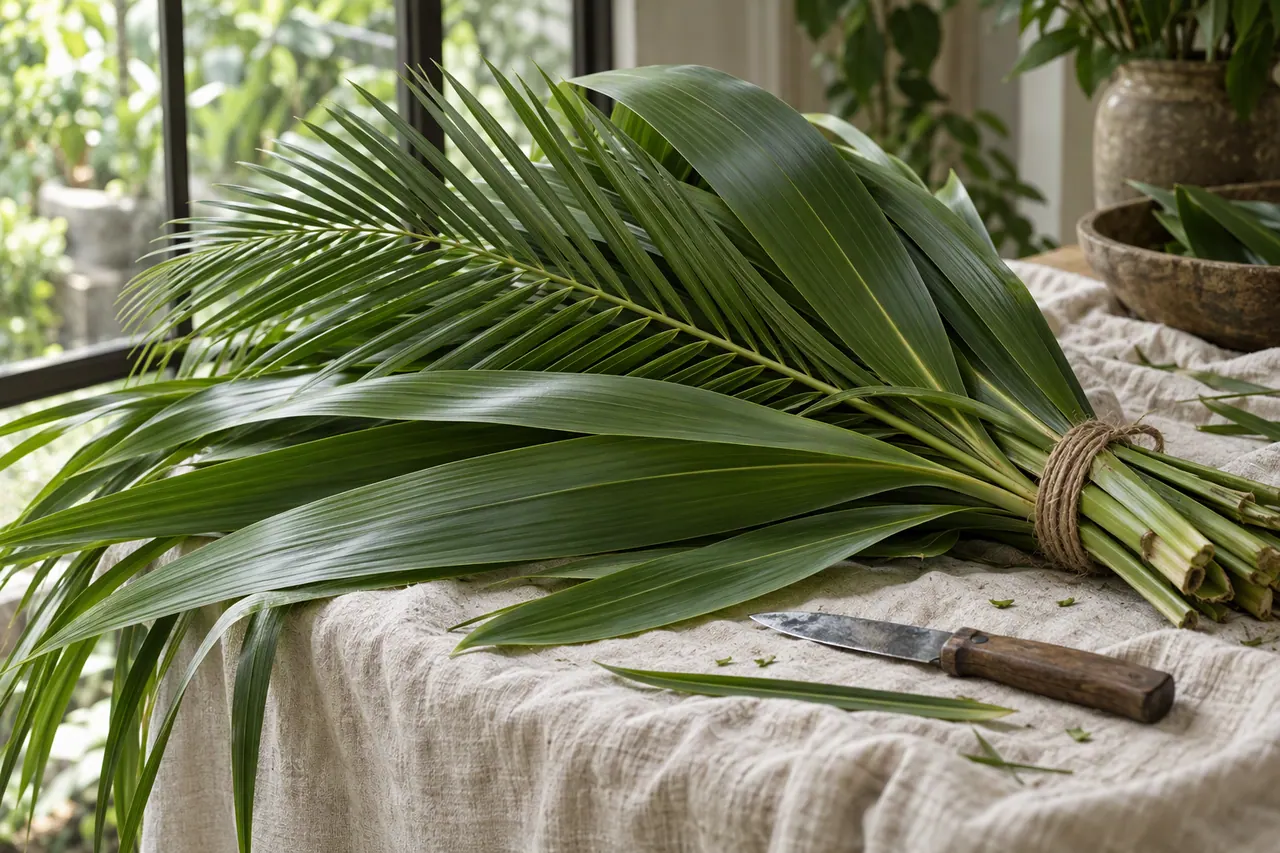
Practical places to find palm and coconut leaves for weaving, how to gather them responsibly, and how to tell fresh, usable leaves from ones that will crack.
The hardest part of leaf weaving is rarely the weaving. It is getting hold of good material in the first place, especially if you do not live somewhere palms grow, or if you live somewhere they do but have no idea who to ask.
This guide covers the realistic sources, in rough order of how good they are, along with the etiquette and the small legal details that catch beginners out. Most of the best sources are free, and most of them are closer than you think. A single productive tree can keep a hobby weaver supplied for years. The main obstacle is not scarcity but knowing where to look and whom to ask.
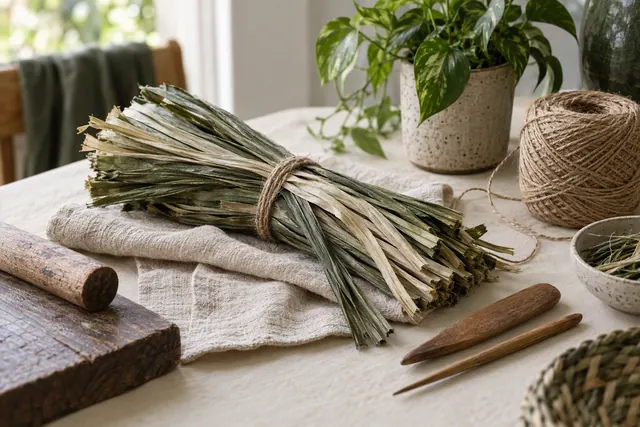
Good weaving material is fresh, pliable and free of spines. The single best test is to bend a strip into a tight loop. If it folds without cracking, it will weave. If it snaps or splits along the vein, it is either too old or too dry, and no amount of technique will save it. Keep that test in mind as you read the sources below, because it is the difference between a pleasant afternoon and a frustrating one. It also tells you quickly whether a free pile of fronds is worth carrying home.
Where to find leaves
| Source | Best for | Fresh or dried | Cost |
|---|---|---|---|
| Your own garden palm | Regular supply | Fresh | Free |
| Friends and neighbours | Small amounts | Fresh | Free or a gift |
| Farmers markets | Seasonal bulk | Fresh | Low |
| Asian and Latin grocery stores | Coconut and banana leaves | Fresh or frozen | Low |
| Florists and event venues | Decorative palm fronds | Fresh, after events | Free if you ask |
| Landscaping and council prunings | Bulk fronds | Fresh | Free, with permission |
| Online craft suppliers | Off-season supply | Dried or preserved | Moderate to high |
Two of those deserve a note. Landscaping crews cut palm fronds constantly and usually have to pay to dispose of them, so a polite request often gets you more material than you can carry. The same is true of florists and event venues the day after a wedding, when decorative palm is thrown out by the armful. Ask the day before, bring your own bag, and offer to take the whole pile. Both groups are usually delighted to have someone else deal with the waste. A single phone call to a landscaper can keep you in material for months.
How to gather responsibly
- Ask first. Never cut from a tree that is not yours, including street trees, park trees and anything on communal land.
- Check local rules. Some councils and parks prohibit removing any plant material, even leaves that have already fallen.
- Take only what you will use this week; fresh leaves do not keep long, and wasted material helps no one. A modest bundle you actually use beats a car boot full you throw away. If you are unsure, take less and come back next week.
- Cut cleanly with secateurs rather than tearing, which damages the plant and leaves an untidy stem. A clean cut also keeps the leaf strip intact for weaving.
- Leave the growing tip and the newest fronds so the palm keeps growing and you can return next season.
- Strip spines and rough edges on site, and take the offcuts away with you rather than leaving them behind.
Removing leaves from public parks, reserves or protected palms can carry a fine. Ask the landowner or council before you cut anything, and never take from a plant you cannot identify, since some ornamental palms are protected or toxic. A few minutes of checking prevents a fine and a nasty reaction.
Fresh, dried and preserved
Most weaving is done with fresh leaves, but you can also buy dried or preserved ones online, which is the practical option outside the growing season or in a cold climate. Dried leaves are stiffer and need re-softening: wrap them in a damp cloth for 20 to 30 minutes before use. Preserved leaves, often sold for floristry, stay flexible but may carry a glycerine coating that resists dye and glue, so test one before committing to a project. If the coating beads water, it will bead paint too. Dried leaves are perfectly workable once softened, but they never quite match the flexibility of a fresh frond. For a large project, fresh is worth the wait.
Storing what you gather
Keeping Leaves Usable
- Use fresh leaves within three or four days of cutting, before they stiffen at the edges.
- Store them rolled in a damp cloth inside a paper bag, never in sealed plastic, which traps mould.
- Refrigerate short-term at around 5 degrees C to slow drying if you cannot weave straight away.
- Re-soften stiff leaves in a damp cloth for 20 to 30 minutes before weaving, then test one strip. If the test strip cracks, give the rest another ten minutes.
- Strip and cut strips only when you are ready to weave them, since cut strips dry out fastest.
If you are buying rather than gathering, ask the seller how the leaves were cut and how long ago. A supplier who cannot answer that is usually selling old stock, and old stock cracks at the first fold. A quick question before you order saves a wasted delivery and a disappointing afternoon. Reputable suppliers will happily describe the cut date, and the ones who will not are telling you something useful.
No palm tree nearby?
Our prepared leaf packs arrive soft, stripped and ready to weave the day they land.