
In short
A balanced look at what natural materials genuinely do better in the home, where they fall short, and when plastic is honestly the smarter choice.
Natural materials are having a moment, and that is mostly a good thing. But the case for them is usually made badly, with vague claims about being closer to nature rather than anything you can actually hold and use. A shopping page that says natural and stops there has told you nothing useful.
I want to make the honest version of the argument, which is narrower and more interesting: natural materials do a few things genuinely better than plastic, and a few things worse. Knowing which is which is what lets you choose well, rather than choosing on vibes. The argument below is the one I would make to a sceptical friend, not the one I would put on a label.
The first thing to say is that the word natural is not a synonym for sustainable. Cotton is natural and famously thirsty; some bioplastics are synthetic and compost cleanly. What matters is where a material comes from, how it was made, how long it lasts and what happens at the end of its life. A leaf woven by hand scores well on most of those. A leaf shipped halfway around the world in a refrigerated container scores worse, and no amount of rustic charm changes the arithmetic. The material is only ever one part of a longer story that runs from the field to the bin.
Where natural materials genuinely win
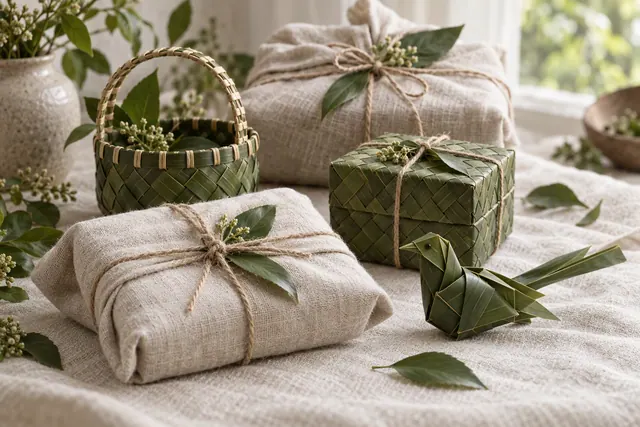
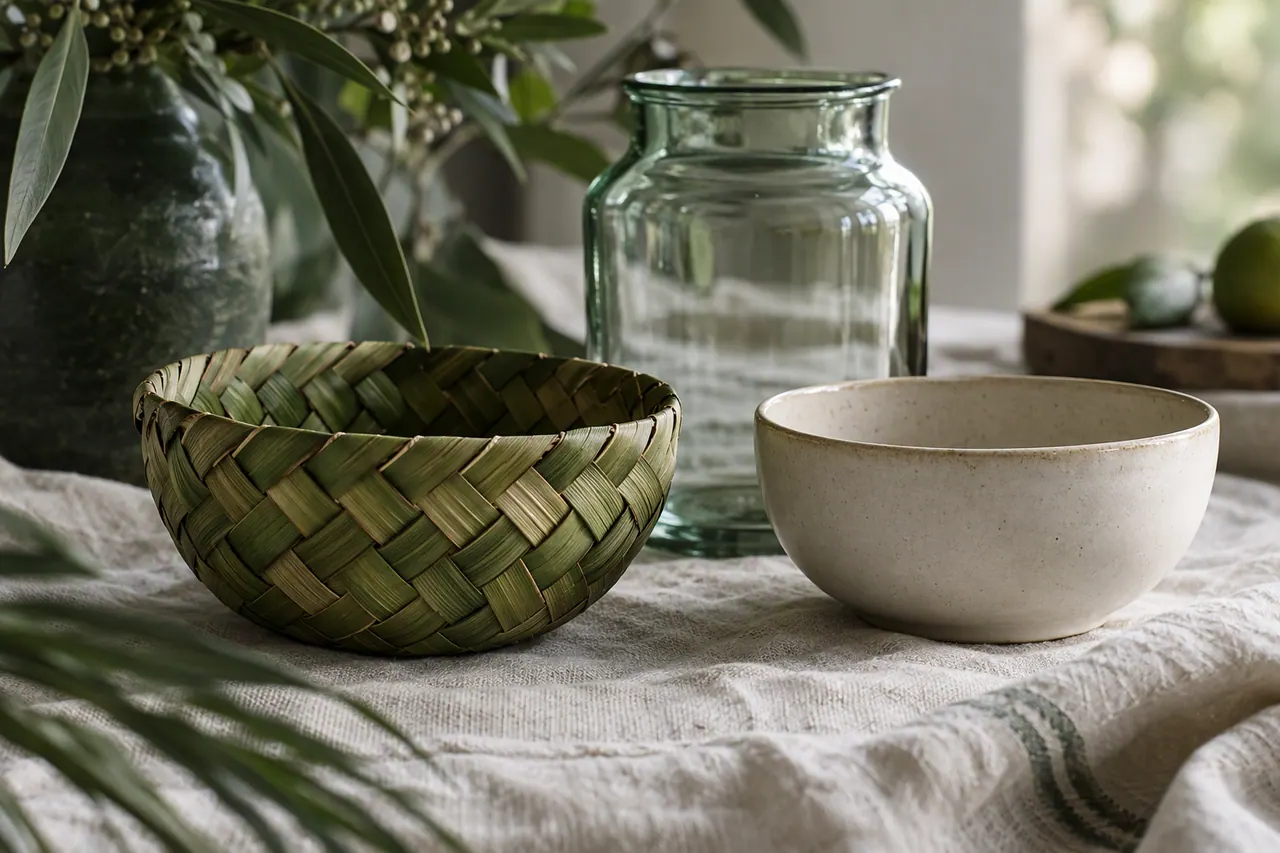
Three advantages hold up again and again in everyday use. The first is breathability: a woven leaf basket lets air move, so fruit does not sweat and bread does not go soft the way it does in a sealed plastic tub. The second is feel. Wood, clay and woven fibre are warm to the touch and slightly irregular, which is pleasant in a way that a smooth injection-moulded surface rarely is. The third is repairability. A loose weave can be re-tucked with your fingers; a cracked plastic lid is landfill, and there is no honest way around that. None of these three is decisive on its own, but together they explain why a woven object often feels better to live with than a moulded one.
- Breathability. Air moves through an open weave, which suits bread, fruit and onions and keeps them fresh longer.
- Ageing well. Natural surfaces gain character as they wear; most plastics only look older and scratched.
- Repair by hand. A slipped strip can be re-woven in seconds, with no tools and no specialist knowledge.
- Warmth. Woven fibre does not feel cold against the skin the way metal or hard plastic can in winter.
- Local sourcing. In many regions, weaving material grows within walking distance, which keeps transport emissions low.
Where they fall short
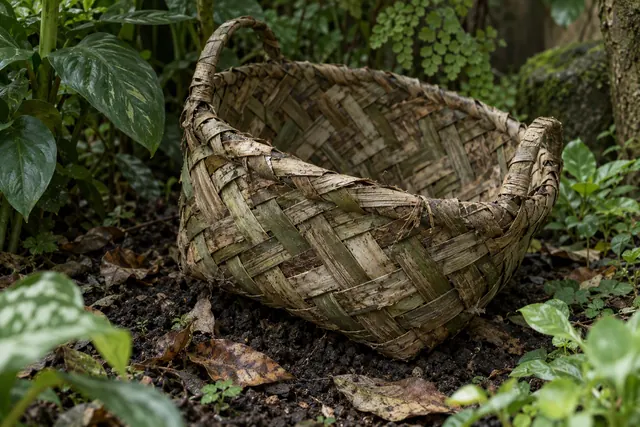
Now the honest part. Natural materials are variable, and that variability is not a charming quirk so much as a real engineering problem. Two strips from the same palm will dry at different rates and shrink differently, so a finished basket may sit slightly uneven after a month. They are also sensitive to water, and a woven piece left damp will grow mould long before a plastic one shows any harm. And their lifespan, used hard, is simply shorter. A basket that carries wet groceries every week will look tired within a year. If a seller claims otherwise, they are describing a decorative object, not a working one.
| Property | Natural leaf/fibre | Plastic |
|---|---|---|
| Lifespan (daily use) | 1 to 3 years | 5 to 20 years |
| Water resistance | Poor; needs drying | Excellent |
| Consistency | Variable batch to batch | Highly uniform |
| Repair | By hand, easy | Rarely possible |
| End of life | Composts or biodegrades | Persists for centuries |
| Feel and warmth | Warm, textured | Neutral, smooth |
A natural object that lasts two years and then composts can still be the better choice than a plastic one that lasts ten and then sits in landfill. The maths depends on how it was made and how you use it, not on the word natural alone. A long-lasting plastic crate used for twenty years can beat a short-lived basket replaced every season.</p>
Choosing well rather than choosing natural by default
The useful question is not which material is more natural, but what this object needs to do. A bread basket needs breathability, so a woven leaf basket is the right answer. A lunchbox that will sit in a damp bag all day needs water resistance, and a sealed container is the right answer. Using the wrong material for the job is how natural homeware gets a reputation for being impractical, when the real fault was the choice, not the material. Match the object to the task and natural materials quietly outperform plastic more often than not.
Matching material to job
- Bread, fruit and onions: open natural weaves that breathe and let moisture escape.
- Anything wet or greasy: sealed materials, natural or not, so nothing leaks through the weave.
- High-wear daily items: choose the longest-lasting option you will genuinely keep and use.
- Decorative pieces: natural materials age beautifully and need little more than a dust.
One more consideration that rarely makes the list: how an object makes a room feel. A shelf of handwoven baskets reads as warm and lived-in in a way that a shelf of identical plastic tubs does not. That is a real benefit, but it is an aesthetic one, and it is worth being honest that this, not performance, is why many of us reach for natural materials in the first place. There is nothing wrong with that, as long as we do not dress it up as engineering. Aesthetics are a legitimate reason to choose something, provided we are honest about what we are actually buying.
Choose pieces that age well
Our woven homeware is made to be used, repaired and eventually composted.