
In short
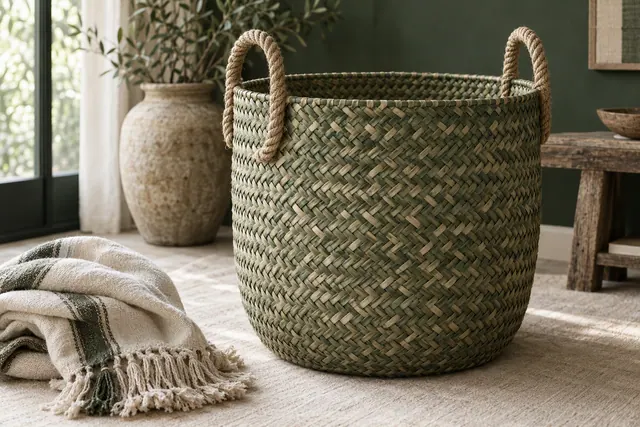
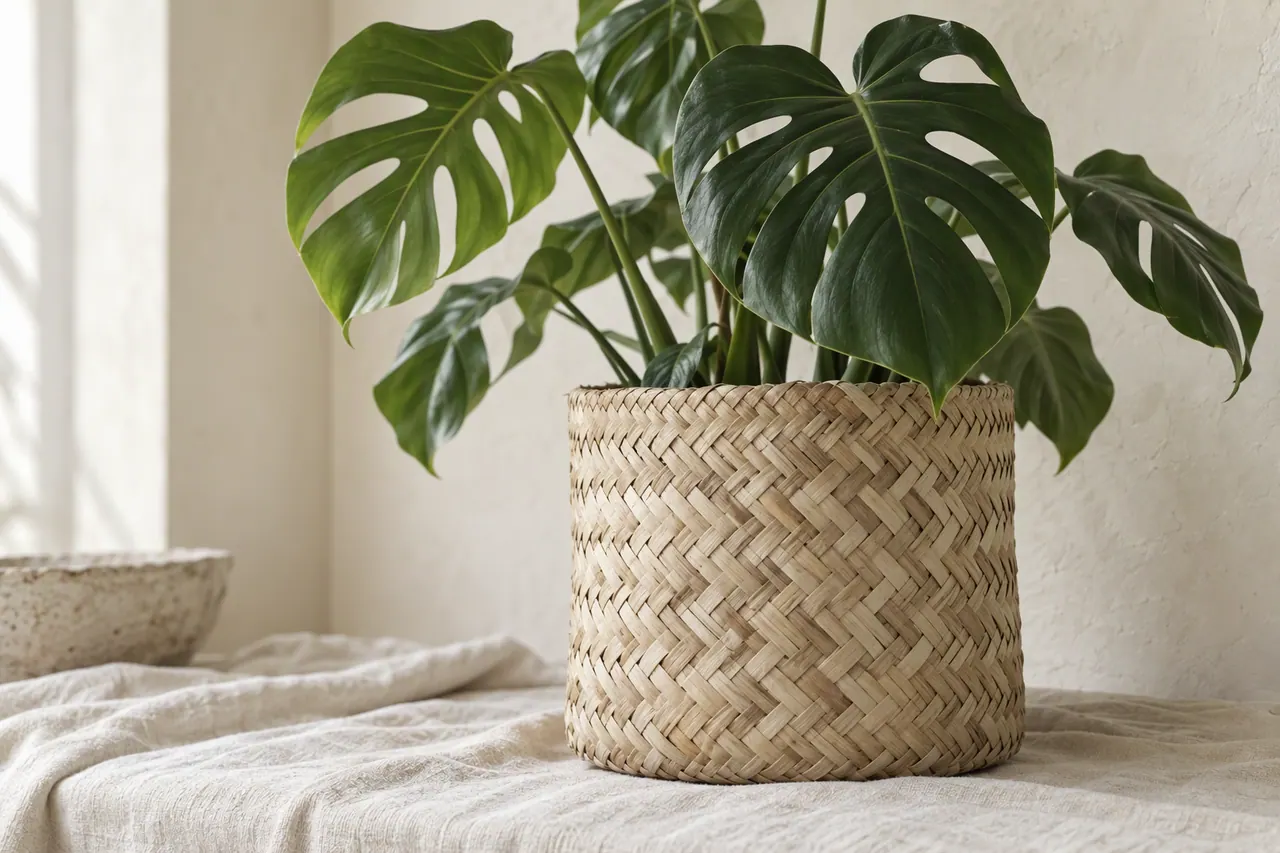
A woven palm leaf planter sized to hide a standard 12 cm pot. Straight walls, a folded rim and a hidden waterproof liner, in about ninety minutes.
A woven planter is the honest answer to an ugly plastic pot. It costs almost nothing, it takes an evening, and it looks far better than anything you can buy for the same money.
This one is sized for a standard 12 cm nursery pot, the size most supermarket houseplants come in. Straight sides, a folded rim, and a small trick to keep water off the leaf.
The planter is a cylinder, which makes it the ideal second project after a flat weave. There is no corner to fight and no handle to attach, so you can concentrate on keeping the walls vertical. The one thing that separates a good planter from a bad one is the rim: fold it neatly and the whole piece looks bought, rush it and it looks like a craft fair experiment. Take the rim slowly and the rest takes care of itself. And unlike a basket, a planter is judged from across a room, so neatness matters more here than in almost any other palm leaf project you will make. Weave it slightly too tall rather than too short, because the pot rim should sit just below the woven edge: hidden from view, but not buried so deep that you cannot lift it out. A planter a centimetre taller than you think it needs to be will always look better than one that is a centimetre short.
What You'll Need
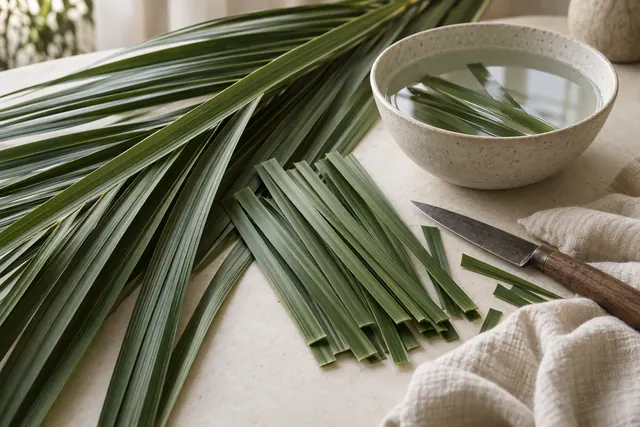
- 10-12 palm leaf strips, about 2 cm wide and 60 cm long
- A 12 cm nursery pot to size the planter against
- Sharp scissors
- A shallow bowl of water
- A small plastic tub or freezer bag for the hidden liner
- A clothes peg to hold the first row
Weaving the planter
Step-by-step instructions
-
1
Weave a round base
Start with six strips crossed at the centre and weave outward in a circle until the base measures 13 cm across, slightly wider than your pot. Keep it flat by pressing it under your palm every few rounds.
-
2
Turn the corner
When the base is wide enough, bend every strip up sharply against the edge and hold the first upright row with a peg. This bend sets the diameter, so check it against the pot before you weave on.
-
3
Build straight walls
Weave horizontally around the uprights, over one and under the next, until the walls are 12 cm tall. Keep the rows level; a ruler held against the side every few rounds will catch a lean early.
-
4
Add the last row
Weave one final row and pack it down hard so the top edge is firm. This row carries the weight of the rim, so it needs to be the tightest of the whole piece.
-
5
Fold the rim
Fold each upright over the last row and tuck the tip down inside the wall, two rows deep. Work around the pot in one direction so the folds overlap neatly and the rim reads as one continuous line.
The liner matters more than it sounds. Palm leaf is not waterproof, and a planter that sits in a wet saucer will grow mould at the base within a fortnight. Slide a small plastic tub or a doubled freezer bag inside the weave, drop the plant pot into that, and water as normal. Nobody sees the plastic, the leaf stays dry, and the whole thing lifts out for cleaning. If you would rather skip the plastic, use it as a cachepot only and never water the plant while it is inside. That second option works well for succulents and cacti, which barely need watering at all, but it is a poor idea for anything thirsty. Whichever route you take, always water over a sink and let the pot drain fully before it goes back in, because a puddle trapped at the base is the fastest way to ruin the weave.
Caring for a woven planter
A woven planter lives indoors, which makes caring for it simple. Keep it out of direct sun, because strong light bleaches the leaf and dries it until it cracks at the rim. Dust it with a soft brush rather than a damp cloth, and if it ever does get splashed, blot it dry straight away and let it air. Every six months or so, rub a little beeswax into the outside with a cloth; it feeds the leaf, deepens the colour, and adds a thin water-resistant skin. Handled this way, a planter will look good for years, and it will age into a warmer, softer tone that plastic never does.
Never plant directly into the woven planter. Without a pot and liner, the leaf will stay damp, and damp palm leaf goes soft and then mouldy within weeks.
Helpful Tips
- Sizing the base 1 cm wider than the pot makes the pot drop in and out easily. Match it exactly and it will jam.
- If the walls start to lean, do not pull them straight. Undo the last two rows, re-pack them evenly, and carry on.
- A coat of clear beeswax on the finished outside helps it shrug off splashes and keeps the colour richer.
- Group three planters of different heights on a shelf. The set reads as furniture; one on its own reads as a craft.
- Weave the base over a bowl to keep the circle true. A flat table lets the edges curl up unnoticed.
- Rotate the planter a quarter turn every few weeks so the leaf fades evenly on all sides.
Not in the mood to weave?
Our ready-made planters are woven to fit 10, 12 and 14 cm pots, and they ship with a liner already fitted.